
The research
Nature-Based Food Systems in Bangladesh
A two-year participatory research programme spanning forty-seven farming households across Mymensingh, measuring whether ecological interventions can match or exceed conventional inputs on yield, income, and long-term ecosystem viability.
47
farming households
4
ponds monitored
5
research phases
6
water parameters
The problem
Why this research?
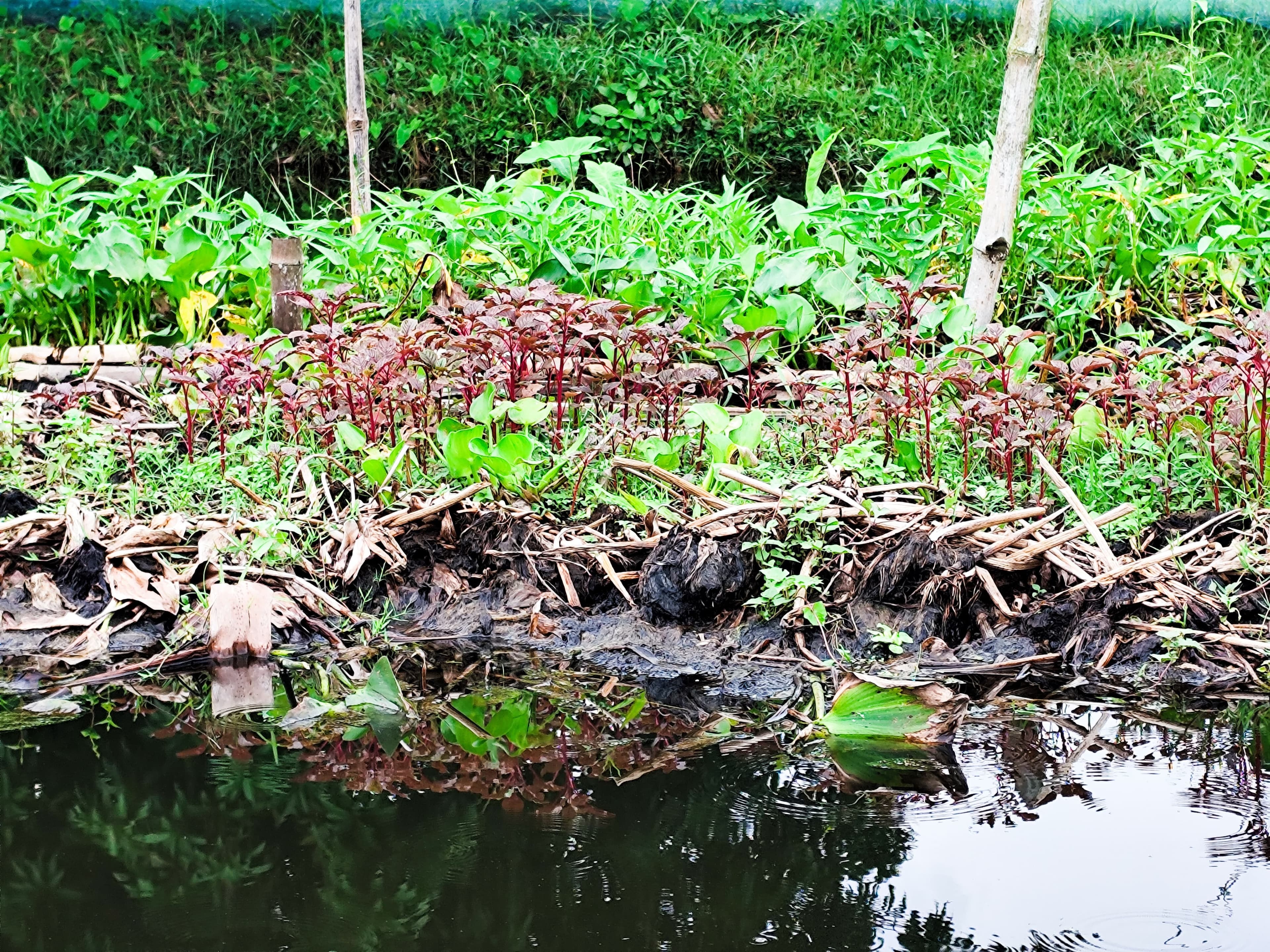
Bangladesh is a major deltaic region with vast floodplains and wetlands that shape national food security, fisheries production, and rural livelihoods. However, these vital freshwater ecosystems are facing severe degradation due to intensified local anthropogenic pressures (agricultural runoff and domestic wastewater) and nutrient loads from upstream transboundary rivers.
Climate change is causing more floods, leaving farmers with less dry land to grow food. This research looks at a traditional local practice where farmers build floating gardens out of water hyacinth. Instead of treating the weed as a useless nuisance, the study uses it as a free, floating platform to grow vegetables.
By adding filter-feeding fish (like Silver carp and Mola) into the same pond, the system works naturally. The fish eat the excess algae, and the vegetables absorb the bad nutrients from the water. This creates a cheap, fertilizer-free ecosystem that cleans the water, provides clean food, and helps poor families survive floods.
How it works
Research phases
- 01
Site Selection
Chose 4 ponds to establish a baseline for water quality, measuring pH, dissolved oxygen, ammonia, nitrates, and phosphates at each site.
- 02
Building Floating Beds
Constructed durable floating platforms (5 m × 4 m) using bamboo frames and 150 kg of water hyacinth per bed.
- 03
Planting & Stocking
Planted leafy vegetables (Red amaranth, Water spinach, and Pumpkin) directly on the beds. Stocked three filter-feeding fish species: Silver carp, Bighead carp, and Mola.
- 04
Monitoring & Harvesting
Tracked water quality every 14 days and harvested vegetables continuously throughout the growing season.
- 05
Community Engagement
Worked directly with local communities to assess adoption potential and ensure the system fits local gender roles and market needs.
Our approach
How we work
- We use Nature-based Solutions (NbS) instead of conventional methods
- We improve and monitor water quality parameters
- We support organic and nutritious food production
- We create a sustainable integrated system
- We improve community livelihoods and income opportunities
- We promote women empowerment through active participation, skill development, and income-generating opportunities
Creating Multiple Benefits Through Nature
Impact
Improves water quality and reduces nutrient pollution
Ecosystem Restoration
Transforms water hyacinth from a harmful weed into a valuable resource. Invasive species management as a productive input.
Fertilizer-free crop and fish production
Food & Nutrition Security
Produces vegetables and micronutrient-rich fish without synthetic fertilizers.
Flood-adapted farming
Climate Resilience
Supports agricultural production during floods and prolonged waterlogging.
Low-input income for vulnerable households
Community Livelihoods
Provides accessible income opportunities for farming households with minimal capital requirements.
Waste into biological infrastructure
Circular Economy
Converts ecological waste into productive biological infrastructure, closing the nutrient loop.
Global Goals
Sustainable
Development
Goals
The research directly supports nine Sustainable Development Goals.
 No Poverty
 Zero Hunger
 Good Health and Well-being
 Quality Education
 Gender Equality
 Clean Water and Sanitation
 Reduced Inequalities
 Climate Action
 Life Below Water
Collaboration
Partners
We are independent researchers. Our partners fund or advise; they do not direct findings.
- World Food Forum, FAO

- Global youth innovation partner
- Wageningen University & Research (WUR)
- Funding & innovation challenge host
- WUR Student Challenges
- Student innovation programme
- Bangladesh Agricultural University (BAU)
- Host institution & research
- Netherlands Food Partnership (NFP)
- Challenge co-host & funding partner
- BAUECBangladesh Agricultural University Extension Centre (BAUEC)
- Field implementation & community outreach
- Sharnalata Agro Fisheries Ltd.
- Aquaculture resource partner